

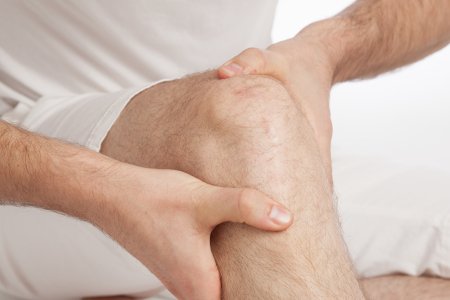
Image credit: Studio Teo
Sharp knee pain when climbing stairs?
A dull ache after sitting too long?

KneePain
Do you suddenly experience sharp Pain in your knee when climbing stairs, or feel a dull ache after sitting for extended periods? KneePain can affect one knee or both simultaneously. It ranks amongst the most common problems of the musculoskeletal system. Causes often involve muscular-fascial overload and tension, though sometimes arthritis or Baker's Cysts may contribute. People who sit frequently or move in repetitive patterns particularly tend to develop knee complaints.
The knee joint represents the largest joint in the human body. It must withstand enormous forces in daily life, such as when climbing stairs. Lack of movement and one-sided loading, as occurs with sedentary work, additionally increases the risk of KneePain.
Osteoarthritis of the knee very frequently underlies these complaints. For instance, Gonarthrosis involves a joint condition that usually develops slowly. Initially, only small wear areas appear on cartilage surfaces, often without noticeable Pain. Later, fine tears and fraying develop, eventually progressing to clear cartilage damage. Over time, bone changes can also develop, until complete cartilage loss with bone remodelling occurs in the final stage.
Important to understand: Cartilage itself has no Pain receptors. This means Pain always originates from surrounding structures that react to changes within the joint.
Pain may often show improvement following the first Osteopressure session, even when structural changes are present. This suggests that muscular tensions surrounding the knee joint may be significant contributors to the Pain experience.